Torque Converter
Torque Unit Converter
Convert between different torque measurement units instantly. Perfect for engineers, mechanics, and automotive enthusiasts.
Conversion Result
73.76
Foot-pounds (ft-lb)
Common Conversions
Torque Conversion Table
| Unit | Newton-meter (Nm) | Foot-pound (ft-lb) | Inch-pound (in-lb) |
|---|---|---|---|
| 1 Nm | 1 | 0.7376 | 8.8507 |
| 1 ft-lb | 1.3558 | 1 | 12 |
| 1 in-lb | 0.1130 | 0.0833 | 1 |
| 1 kgf·m | 9.8067 | 7.2330 | 86.7962 |
| 1 kgf·cm | 0.0981 | 0.0723 | 0.8680 |
What is Torque?
Torque is a measure of the rotational force applied to an object. In physics, it’s the tendency of a force to rotate an object about an axis, fulcrum, or pivot.
Just as a linear force is a push or a pull, a torque can be thought of as a twist to an object. Torque is typically measured in newton-meters (Nm) or foot-pounds (ft-lb) in the imperial system.
Common Applications
- Automotive: Specifying bolt tightening requirements
- Engineering: Designing mechanical systems
- Manufacturing: Calibrating tools and machinery
- Bicycle maintenance: Adjusting components
- Industrial equipment: Ensuring proper operation
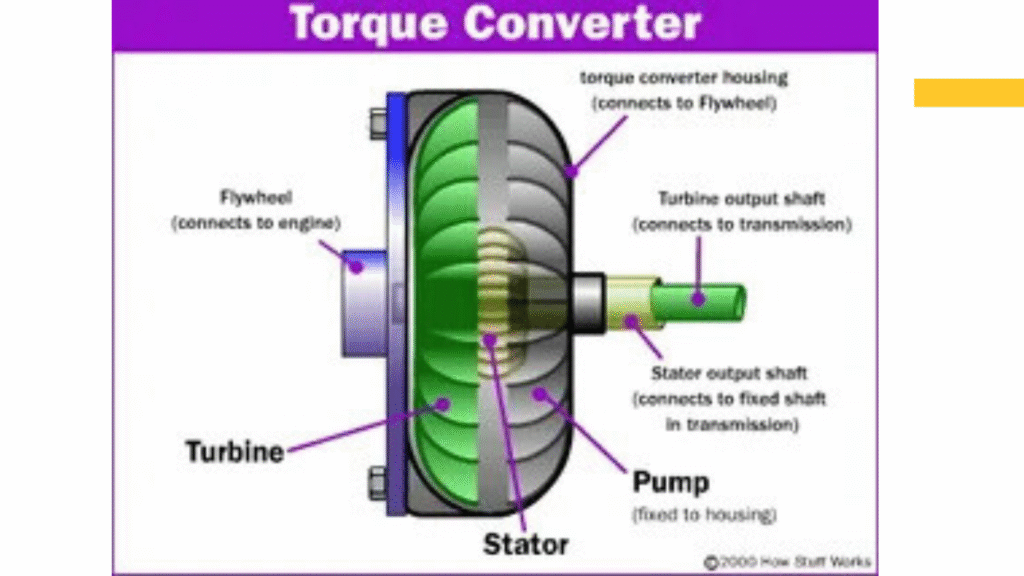
🧩 Components of a Torque Converter
A torque converter comprises four essential parts:
- Pump (Impeller): Connected to the engine crankshaft and rotates with it. It throws transmission fluid outward using centrifugal force.
- Turbine: Receives the fluid from the pump, which causes it to spin and transfer power to the transmission.
- Stator: Sits between the pump and turbine. It redirects the fluid returning from the turbine to increase torque and prevent fluid resistance.
- Torque Converter Clutch (TCC): In modern converters, this locks the engine and transmission together at higher speeds for fuel efficiency.
⚙️ How Does a Torque Converter Work?
🔄 Step-by-Step Working:
- Engine Starts: The pump starts rotating with the engine.
- Fluid Circulation: The pump flings transmission fluid outward into the turbine.
- Turbine Spins: Fluid motion turns the turbine blades, spinning the transmission input shaft.
- Stator Action: Redirects returning fluid to assist the pump and multiplies torque.
- Lock-Up Clutch Engages: At cruising speed, the clutch locks the turbine to the pump for better fuel economy.
This process ensures a smooth, vibration-free transfer of power, making it ideal for city and highway driving alike.
🧾 Types of Torque Converters
| Type | Description | Use Case |
|---|---|---|
| Single-Stage | Basic configuration with one set of stator-turbine-pump | Common in regular passenger cars |
| Multi-Stage | Has multiple turbines or stators for higher torque | Heavy trucks, performance vehicles |
| Lock-Up | Includes clutch to connect directly to the flywheel | Modern cars for better mileage |
| Variable Pitch | Adjustable stator angles for performance or economy | Luxury and high-performance cars |
✅ Advantages of a Torque Converter
- Smooth acceleration: No manual gear changes or clutch pedal
- Torque multiplication: Better low-end power and towing capability
- Fuel efficiency: Lock-up converters reduce engine load
- Shock absorption: Damps engine vibrations for comfort
- Extended transmission life: Reduces mechanical wear compared to manual clutch
⚠️ Symptoms of a Failing Torque Converter
If your torque converter starts to fail, you may notice:
- 🔁 Transmission slipping (RPM increases, speed doesn’t)
- 🛑 Vehicle stalls when idling in gear
- 🔊 Unusual noises like grinding, whining, or clicking
- 🚨 Transmission overheating warning
- 🐢 Poor acceleration or shuddering
🔧 Torque Converter vs Manual Clutch – Key Differences
| Feature | Torque Converter | Manual Clutch |
|---|---|---|
| Transmission Type | Automatic | Manual |
| Power Transfer Method | Hydraulic (Fluid) | Mechanical (Friction plates) |
| Control | Automatic via ECU | Manual via pedal |
| Comfort | Smooth, ideal for urban driving | Driver-controlled |
| Maintenance | Low, but expensive to replace | Higher frequency, cheaper repairs |
🛠️ Applications of Torque Converters
- Passenger Vehicles: Most automatic cars and SUVs
- Heavy-Duty Trucks: Multistage converters for hauling
- Construction Machinery: Loaders, excavators, bulldozers
- Industrial Equipment: Hydraulic pumps and turbines
🧪 Internal Tools You Can Use
🌐 Further Reading (External DoFollow Links)
📌 Final Thoughts
The torque converter is the unsung hero of your automatic transmission system. From enabling smooth idle to multiplying torque for rapid acceleration, it plays a crucial role in performance and efficiency. Understanding how it works and recognizing failure signs ensures a longer vehicle lifespan and better driving experience.
Would you like a visual infographic, interactive animation, or an HTML web tool version of this guide?