Pressure Converter
Convert between different pressure units instantly
Common Conversions
| Unit | Value |
|---|
About Pressure Units
Pressure is the force applied perpendicular to the surface of an object per unit area. Different units are used in various contexts:
- Pascal (Pa): The SI unit of pressure, equal to one newton per square meter.
- Bar: Approximately equal to atmospheric pressure at sea level (1 bar = 100,000 Pa).
- PSI: Pounds per square inch, commonly used in the United States.
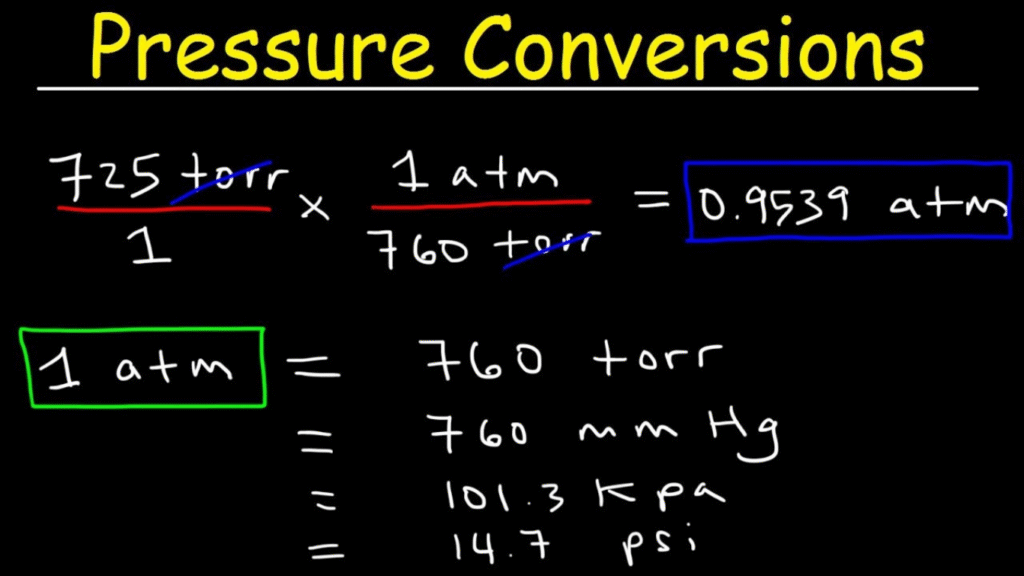
- Atmosphere (atm): Standard atmospheric pressure at sea level.
- mmHg/Torr: Millimeters of mercury, often used in medicine and meteorology.
🧠 Complete Guide to Pressure Conversion
Pressure is a fundamental concept in physics and engineering, and pressure conversion is crucial when working across different unit systems or industries. From inflating tires to designing hydraulic machines or analyzing atmospheric data, professionals often need to convert pressure from one unit to another.
In this comprehensive guide, we’ll explain the basics of pressure, delve into all major pressure units, show you how to convert them with formulas and tables, and offer a quick tool to make conversion effortless.
📘 What is Pressure?
Pressure is defined as the force exerted per unit area. It’s a measure of how much force is applied to a surface.
Formula:
rCopyEditPressure (P) = Force (F) / Area (A)
- SI Unit of Pressure: Pascal (Pa)
- Common Units: PSI (Pounds per Square Inch), Bar, Atmospheres (atm), Torr, mmHg, and more
Understanding pressure units helps in scientific research, mechanical engineering, fluid dynamics, and even everyday tasks like checking a tire gauge.
🌍 Why Pressure Conversion Matters
Pressure is measured differently across various industries and countries:
- Europe: Often uses Bar and kPa
- US/UK: Commonly uses PSI
- Scientific Labs: Use Pa, Torr, or atm
Without proper conversion, calculations can go wrong, affecting system performance, safety, or data integrity.
📏 List of Pressure Units and Their Relationships
| Unit Name | Symbol | Equivalent in Pascals (Pa) | Description |
|---|---|---|---|
| Pascal | Pa | 1 Pa | SI base unit |
| Kilopascal | kPa | 1,000 Pa | Common in weather reports |
| Bar | bar | 100,000 Pa | Used in Europe and industry |
| PSI | psi | 6,894.76 Pa | Pounds per square inch (US) |
| Atmosphere | atm | 101,325 Pa | Average Earth atmospheric pressure |
| Torr | Torr | 133.322 Pa | Equivalent to 1 mmHg |
| Millimeters Hg | mmHg | ~133.322 Pa | Used in medicine and meteorology |
🔄 Conversion Formulas
✅ Convert PSI to Bar:
javaCopyEdit1 PSI = 0.0689476 Bar
Bar = PSI × 0.0689476
✅ Convert Bar to PSI:
javaCopyEdit1 Bar = 14.5038 PSI
PSI = Bar × 14.5038
✅ Convert Pascal to Atmosphere:
javaCopyEdit1 atm = 101325 Pa
atm = Pa ÷ 101325
✅ Convert Torr to Pa:
javaCopyEdit1 Torr = 133.322 Pa
Pa = Torr × 133.322
⚙️ Free Pressure Conversion Tool
You can save time and eliminate errors by using an online Pressure Conversion Tool. Simply enter your value, select units (e.g., PSI to Bar), and get instant results.
🔧 Features:
- Supports all major units (Pa, PSI, Bar, atm, Torr)
- User-friendly interface
- Mobile-friendly
- Accurate real-time results
📚 Practical Examples
🛞 1. Tire Pressure:
Car manuals in Europe may specify 2.1 Bar, but your American gauge shows PSI.
2.1 Bar × 14.5038 = 30.46 PSI
🔬 2. Lab Experiment:
If a gas pressure reads 500 mmHg, convert it to atm:
500 ÷ 760 = 0.658 atm
💧 3. Hydraulic System:
Your system pressure is 3000 PSI, and you need it in bar:
3000 × 0.0689476 = 206.84 bar
🔗 Related Tools (Internal Links)
- Temperature Converter – Convert °C, °F, K, and more
- Force Converter – Convert newtons, pounds-force, etc.
- Energy Converter – Convert joules, calories, kWh
🌐 External Resources
🧾 Summary
Understanding and using a pressure conversion tool is not just a matter of convenience—it’s vital in science, industry, engineering, and everyday life. Whether you need PSI to Bar, Torr to atm, or Pa to mmHg, using the right formulas and tools can make all the difference.